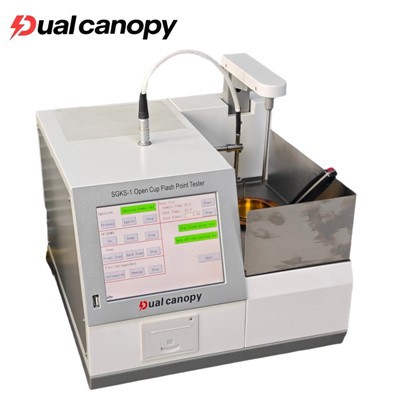
What is the measurement range of a Transformer DC Resistance Tester?
As a seasoned supplier of Transformer DC Resistance Testers, I am often asked about the measurement range of these essential devices. Understanding the measurement range is crucial for anyone involved in transformer testing, as it determines the tester's applicability and accuracy across different types of transformers.
Before delving into the specific measurement ranges, it's important to understand what a Transformer DC Resistance Tester does. It measures the DC resistance of transformer windings. This measurement is vital for diagnosing the health of a transformer. It can help identify issues such as short - circuited turns, broken conductors, and poor connections in the windings.
Typical Measurement Ranges
The measurement range of a Transformer DC Resistance Tester can vary significantly based on the model and its intended use. In general, these testers can measure resistances from very low values to relatively high ones.
For small - scale transformers, such as those used in electronic devices or low - power applications, the resistance values are often in the milliohm (mΩ) range. Some advanced Transformer DC Resistance Testers are capable of measuring resistances as low as 10 μΩ. This high level of precision is necessary for accurately assessing the condition of these small transformers, where even a slight increase in resistance can indicate a problem.
On the other hand, for large power transformers, the resistance values can be in the ohm (Ω) to kilohm (kΩ) range. Larger transformers have more turns of wire and thicker conductors, which generally result in higher resistance values. A typical Transformer DC Resistance Tester for power transformers may have a measurement range from 1 mΩ up to 20 kΩ. This wide range allows for comprehensive testing of different types and sizes of power transformers.
Factors Affecting the Measurement Range
Several factors influence the choice of a suitable measurement range for a Transformer DC Resistance Tester.
Transformer Type and Size
As mentioned earlier, the type and size of the transformer play a significant role. Small distribution transformers, with fewer turns and smaller conductors, will have lower resistances compared to large power transformers used in substations or industrial applications. For example, a small 10 kVA distribution transformer may have winding resistances in the range of a few milliohms to a few ohms, while a large 100 MVA power transformer may have resistances in the ohm to kilohm range.
Testing Purpose
The purpose of the test also affects the required measurement range. If the test is for initial acceptance testing of a new transformer, a wide - range tester is often preferred to cover all possible resistance values. This ensures that any potential manufacturing defects can be detected accurately. In contrast, during regular maintenance testing, where the expected resistance values are known based on previous test results, a tester with a more focused range may be sufficient.
Accuracy Requirements
Higher accuracy is generally required for lower resistance measurements. When measuring very low resistances, even a small measurement error can have a significant impact on the diagnosis. Therefore, testers designed for low - resistance measurements usually offer higher accuracy, often in the range of ±(0.1% + n digits). For higher - resistance measurements, the accuracy requirements may be slightly relaxed, but still need to be sufficient to detect any significant changes in resistance over time.
Our Company's Transformer DC Resistance Testers
Our company offers a wide range of Transformer DC Resistance Testers to meet the diverse needs of our customers. Our testers are designed with advanced technology to provide accurate and reliable measurements across different resistance ranges.
For customers dealing with small - scale transformers, we have models that can measure resistances from as low as 10 μΩ with high accuracy. These testers are portable and easy to use, making them ideal for on - site testing of electronic transformers and low - power equipment.
For those working with large power transformers, our high - end testers offer a measurement range from 1 mΩ to 20 kΩ. These testers are equipped with features such as high - current output, which is necessary for accurate measurement of the relatively high resistances of large transformer windings.
In addition to our Transformer DC Resistance Testers, we also offer a range of related products. For example, if you are interested in measuring high - voltage levels accurately, our AC DC Divider can be a valuable addition to your testing equipment. It provides precise voltage division for both AC and DC applications.
For testing transformer tap changers, our Transformer Tap Changer Test Equipment OLTC Tester is designed to accurately assess the performance of on - load tap changers. This equipment can help detect issues such as contact burning, improper timing, and electrical arcing in the tap changers.
And for those concerned with the quality of insulation oil in transformers, our Upgraded Insulation Oil Dielectric Strength Tester can measure the dielectric strength of the oil, which is an important indicator of its insulation properties.
Conclusion
The measurement range of a Transformer DC Resistance Tester is a critical factor in its selection. It depends on various factors such as the type and size of the transformer, the testing purpose, and the accuracy requirements. Our company, as a leading supplier of Transformer DC Resistance Testers, offers a comprehensive range of products to meet different needs. Whether you are testing small - scale electronic transformers or large power transformers, we have the right tester for you.


If you are interested in our Transformer DC Resistance Testers or any of our other testing equipment, we encourage you to contact us for more information. Our team of experts is ready to assist you in choosing the most suitable products for your specific requirements and to discuss potential procurement options.
References
[1] Electrical Power Transformer Engineering: Design and Application, by Turan Gonen
[2] Transformer Testing Handbook, by ABB Group