


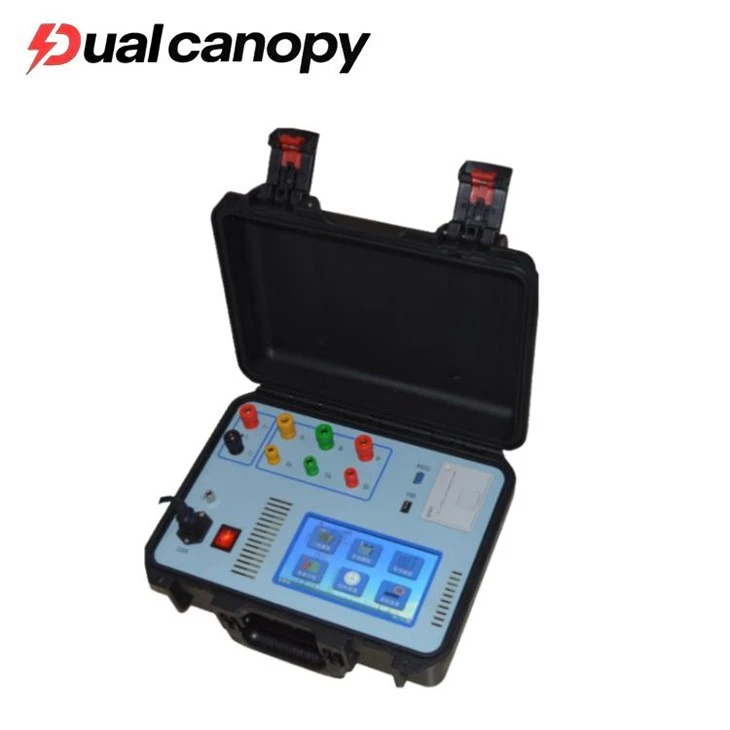


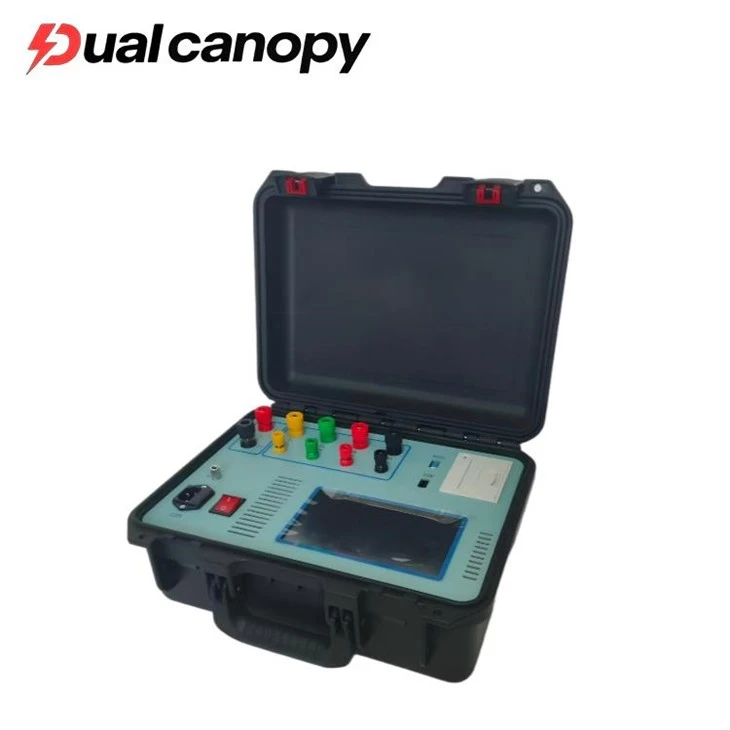
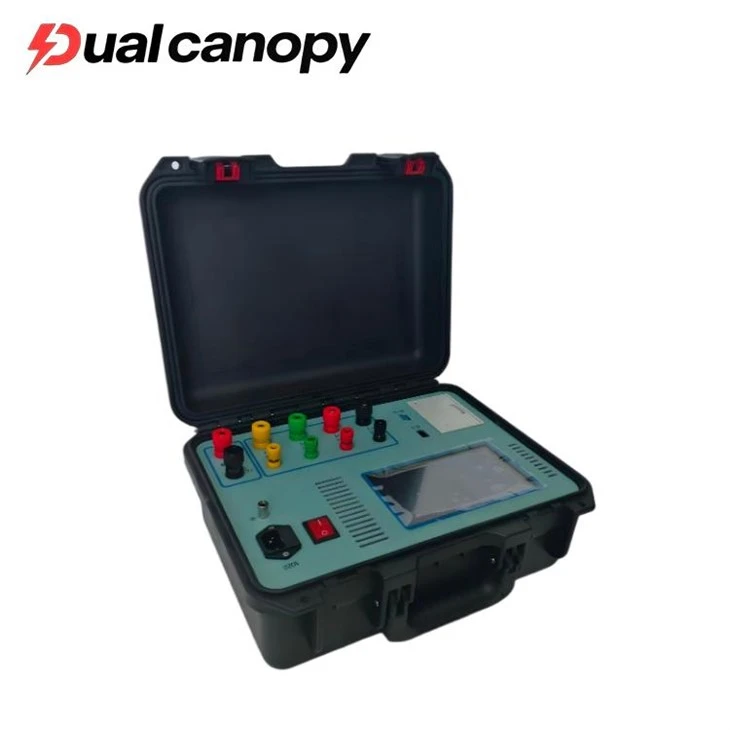
Dual Canopy Mechanic Electrical Engineering Co., Ltd. is one of the leading manufacturers and suppliers of Short Circuit Impedance Testing in China. Please feel free to wholesale discount products for sale here and get quotation from our factory. Customized orders are welcome.
What is Short Circuit Impedance Testing?
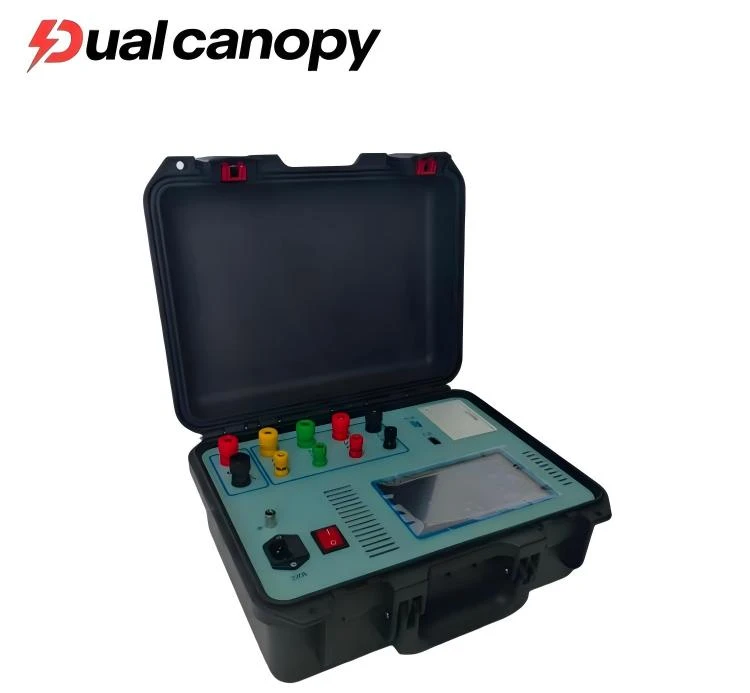
Transformer Short Circuit Impedance Testing-whether labeled Zk, %Z, or Uk-stands as a fundamental parameter that defines a transformer's leakage reactance and equivalent impedance. Its magnitude shapes real-world operating boundaries: it dictates if multiple transformers can share load in parallel, sets the ceiling for fault current levels, and determines whether winding structures can endure the crushing mechanical forces unleashed during a short-circuit event.
The test system arrives at these figures by driving a controlled current through the transformer windings and sampling the resulting voltage and current with precision instrumentation. It records short-circuit impedance, impedance voltage, and derived quantities that engineers need to evaluate design compliance and physical integrity. Manufacturers, commissioning teams, and maintenance crews all rely on this equipment-during production, acceptance testing, periodic upkeep, and long-term condition monitoring-to ensure the asset performs as intended across its service life.
What is Technical indicators?
|
Single Phase |
Voltage (automatic range) |
15~1000V |
±(reading×0.2%+3) |
|
|
Current (automatic range) |
0.1A~100A |
±(reading×0.2%+3) |
|
|
Power |
COSΦ >0.15 |
±(reading×0.5%+3) |
|
|
Frequency (power frequency) |
45~65(Hz) |
±0.1% |
|
|
Short circuit impedance |
0~100 (%) |
Measurement accuracy: ±0.5% |
|
|
Instrument display |
5 digits |
Where are they typically used?
Factory testing/handover acceptance: Verify the consistency of %Z/Uk on the nameplate to generate acceptance data.
Parallel operation verification: Perform impedance matching assessment for transformers operating in parallel with the same busbar.
Post-transportation retest: After long-distance transportation or hoisting, use as one of the reference quantities for changes in the mechanical condition of the windings.
Post-short-circuit fault assessment: Retest impedance changes after a system short-circuit impact to help determine if there is winding displacement or structural change.
Post-overhaul/component replacement confirmation: Retest after maintenance to ensure parameters are within allowable ranges.
What are the precautions for use?
Before testing, ensure the transformer is de-energized and reliably isolated: strictly implement safety measures such as voltage testing, grounding, and tagging.
Short-circuiting and wiring must be standardized: Insufficient conductor cross-section or poor contact in short-circuiting can introduce additional impedance, causing result deviations and the risk of overheating.
Control current injection time and temperature rise: The current injection circuit may experience significant temperature rise; the testing rhythm should be reasonably arranged according to the equipment's operating system and the on-site temperature rise.
Record tap position and oil/winding temperature (optional): Short-circuit impedance is affected by tap position, temperature, and other factors, facilitating comparative analysis.
Influence of on-site magnetic field and induction: High-current circuits have strong magnetic fields; the measurement cable layout should be neat and avoid long-distance parallel runs with the output conductor.
To end operation, reduce current to zero before disconnecting: Never disconnect short-circuit wires or output lines while current is flowing.
Our address
Baoding Cloud Center, Hebei, China
Phone Number/whatsapp
+86 13483219412
Salesm@dualcanopy.com

FAQ
Q1. How do tap position and temperature affect impedance results?
A: Tap position: Different taps have different impedances; testing must be performed at the same tap.
Temperature: Results need to be corrected to a reference temperature (e.g., 75℃ or 20℃).
Q2. What are the common causes of abnormal %Z results?
A: Poor short circuit, loose connection, incorrect wiring, mismatched tap position, uncorrected temperature, actual internal damage.
Q3. Is single-phase injection sufficient, or is three-phase testing required?
A: Single-phase injection is the standard method for field testing (three-phase short circuit, single-phase pressure applied), sufficient to detect %Z changes. Three-phase testing is less commonly used.
Hot Tags: Short Circuit Impedance Testing, China Short Circuit Impedance Testing manufacturers, suppliers, factory, High Precision Transformer Short Circuit Impedance


