

The "invisibility" and "catastrophic nature" of the failure of vacuum interrupter chambers
Invisibility: The vacuum interrupter is a fully sealed component. From the outside, even if the internal vacuum level has severely deteriorated (from 10⁻⁵ Pa to 10⁻² Pa), it may still appear intact and be able to operate normally for opening and closing under low load. Without specialized instruments, operators cannot detect its early faults through appearance, sound, or routine electrical tests (such as loop resistance testing).
Disastrous: When the vacuum level drops to the critical value (for example, 10⁻¹ Pa), once the fault current is disconnected, the internal arc extinguishing mechanism will fail to function reliably, potentially leading to:
Arc interruption failure (explosion): The arc cannot be extinguished and continues to burn. The internal pressure and temperature rise sharply, eventually causing the arc extinguishing chamber to explode, destroying the switch cabinet and resulting in significant equipment damage and personal injury.
Insulation breakdown: A decrease in vacuum level indicates a reduction in insulation strength. When subjected to system overvoltage, internal breakdown may occur, resulting in permanent damage and system short circuit.
Current-carrying capacity reduction: The contact resistance may increase due to oxidation, causing overheating and damaging the contacts.
The vacuum switch tester is like conducting a regular "coronary angiography" for this "heart", allowing potential problems to be detected at an early stage before symptoms appear.
From "Regular Replacement" to "Condition-Based Maintenance": The Essential Tool
In the past, due to the lack of effective detection methods, power systems generally adopted two strategies for vacuum circuit breakers: either "replace when it breaks" (post-accident maintenance), or "replace at the end of the year" (regular replacement, such as every 10-15 years). Both of these approaches were neither economical nor scientific:
Post-accident maintenance: A costly affair.
Regular replacement: This leads to significant waste, as many high-quality arc extinguishing chambers that have not yet reached their lifespan are prematurely scrapped.
The widespread use of vacuum switch vacuum degree testers has made "condition-based maintenance" possible. Through precise quantitative testing of the vacuum degree, it is possible to:
Evaluate remaining lifespan: Determine whether the current condition is healthy.
Predictive maintenance: Detect a gradual decline in vacuum level, plan for replacement in advance to avoid unplanned power outages.
Verify the quality of new equipment: For newly put into operation or overhauled circuit breakers, the vacuum degree of their arc extinguishing chambers can be verified through testing to determine if it is qualified.
The key guarantee for the reliability of the power grid
Vacuum circuit breakers are the most common protective and control components in the power grid. Their reliability directly affects the continuity of power supply. By conducting comprehensive tests on a large scale and in a planned manner using vacuum degree testers for vacuum switches, we can systematically identify "sub-healthy" switches in the power grid, significantly reducing the rate of power outages caused by faults in the switch bodies, and enhancing the operational reliability of the entire distribution network.
Summarizing its necessity: To address the unique challenge of the invisible and severe consequences of faults in sealed vacuum interrupters, this non-contact, quantitative professional diagnostic instrument must be used to achieve the transformation from passive maintenance to proactive prediction, ensuring the safety of personnel, equipment, and the power grid.
DL/T 596-2021 "Preventive Testing Procedures for Electrical Equipment": This is a "bible"-level regulation in the power industry. It has a dedicated section on preventive tests for high-voltage AC circuit breakers. Regarding the vacuum degree test, it clearly states:
Test item: "Measurement of vacuum degree in vacuum interrupter chamber" is designated as a recommended test item.
Period: It is recommended to conduct this inspection after major maintenance, when necessary, or if there is any suspicion of vacuum problems.
Judgment criteria: A clear qualification threshold has been specified. This is the core basis for on-site judgment. For example, a key value is often referenced in the procedures: the vacuum level should not exceed 6.6 × 10⁻² Pa (or in some versions, 5.0 × 10⁻² Pa). Once the measured value exceeds this threshold, it can be determined as unqualified and must be shut down for replacement.
Supplementary test: It is pointed out that when it is impossible to directly measure the vacuum degree, the "breakdown power frequency withstand voltage test" can be used as an indirect and qualitative alternative judgment method.
The Purpose And Procedures Of The Vacuum Switch Vacuum Degree Tester Test
Popular Products

Open Flash Point Tester
Product Introduction Features: Fully automatic flash point tester, with touch screen instead of keyboard operation.

Capacitance Test
Products Description This 50kVA single phase pole mounted transformer is exported to Canada inJuly,2024.The rated

TTR Transformer Turns Ratio Tester
Products Description The ZS6810A / ZS6810E transformer ratio tester is mainly used for measuring the turns ratio or

Single-phase relay protection tester
The single-phase relay protection tester is a new type of intelligent test instrument, primarily used to calibrate

Sweep Frequency Response Analysers
Products Description Overview The Transformer winding deformation tester transformer winding deformation tester is used
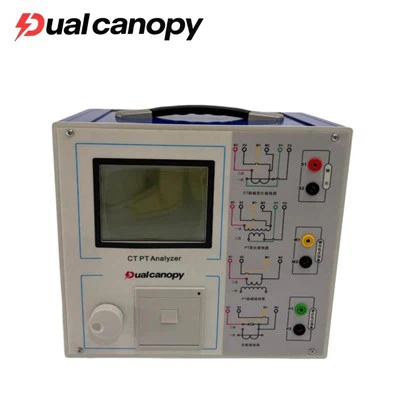
CT PT Excitation Characteristic Analyzer
Products Description The transformer comprehensive measuring instrument is an electronic device used for on-site