

The transformer capacity tester is a specialized device used to measure the actual capacity of a transformer quickly and accurately through low-voltage testing without the need for an external high-power power supply. It can also determine whether the transformer's capacity is consistent with the nameplate. Additionally, it can measure parameters such as no-load loss, load loss, and impedance voltage of the transformer.
Test standard
The transformer capacity and characteristic tests are mainly based on the following national and industry standards:
GB/T 1094.1-2013 "Power Transformers - Part 1: General Principles"
It stipulates the basic terms, definitions and general requirements for transformers.
GB/T 1094.5-2008 "Power Transformers - Part 5: Capacity for Withstanding Short Circuits"
Transformer Capacity Tester
The requirements related to short-circuit impedance.
GB/T 6451-2015 "Technical Parameters and Requirements for Oil-immersed Power Transformers"
It stipulates the standard values for the no-load loss, load loss and short-circuit impedance of transformers of various capacity levels. The built-in database of the capacity tester is precisely based on this standard.
GB/T 10228-2015 "Technical Parameters and Requirements for Dry-Type Power Transformers"
It stipulates the standard values for the no-load loss, load loss and short-circuit impedance of dry-type transformers of each capacity level.
DL/T 1256-2013 "General Technical Conditions for Transformer Short-Circuit Impedance Test Instruments"
Technical specifications specifically designed for such testing instruments.
Test Precautions for Transformer Capacity Tester
Safety first, prevent electric shock: It is necessary to ensure that the transformer is completely de-energized, isolated, and grounded. During the testing process, the transformer bushing and the test leads carry test voltage, although it is a safe voltage, vigilance is still required.
Correct wiring is crucial: Connect the current output to the high-voltage side, and the voltage measurement terminal to the low-voltage side while short-circuiting it. This is the standard wiring method for capacity testing. Incorrect wiring will result in completely wrong results.
Ensure good contact: The test clamp and the transformer bushing must be tightly connected to prevent the contact resistance from affecting the test accuracy.
Verify the connection group: The connection group set in the instrument must be consistent with the transformer nameplate; otherwise, the calculation results will be incorrect.
Environmental temperature: Record the ambient temperature during the test. The instrument needs to adjust the load loss to 75℃ based on this temperature.
Calibration of transformer capacity tester: Regularly send the instrument for calibration to ensure measurement accuracy.
Read the manual: The functions and usage details of different models of instruments vary. Before operating, be sure to carefully read the user manual provided by the manufacturer.
Test Standards And Precautions Related To Transformer Capacity Testers
Popular Products

Open Flash Point Tester
Product Introduction Features: Fully automatic flash point tester, with touch screen instead of keyboard operation.

Capacitance Test
Products Description This 50kVA single phase pole mounted transformer is exported to Canada inJuly,2024.The rated

TTR Transformer Turns Ratio Tester
Products Description The ZS6810A / ZS6810E transformer ratio tester is mainly used for measuring the turns ratio or

Single-phase relay protection tester
The single-phase relay protection tester is a new type of intelligent test instrument, primarily used to calibrate

Sweep Frequency Response Analysers
Products Description Overview The Transformer winding deformation tester transformer winding deformation tester is used
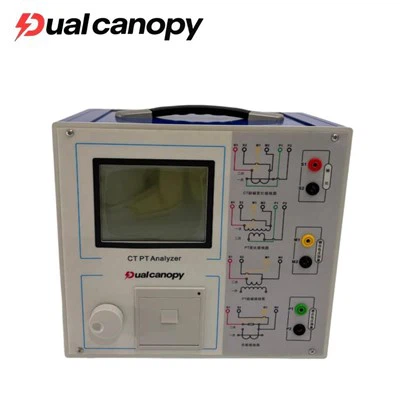
CT PT Excitation Characteristic Analyzer
Products Description The transformer comprehensive measuring instrument is an electronic device used for on-site