

The high-current temperature rise testing equipment can be classified according to the phase number of the output current and its functional application, in order to adapt to different testing scenarios.
Classified by the number of output current phases:
The single-phase high-current generator is mainly used for testing single-phase equipment or conducting phase-by-phase tests, and it serves as a basic current source.
The three-phase high-current generator can more accurately simulate the actual operating conditions of a three-phase balanced load, and is suitable for temperature rise tests of equipment such as three-phase switch cabinets and transformers.
Classified by functional purpose:
The core function of the universal temperature rise type is to provide adjustable high current and is equipped with a multi-channel temperature inspection instrument, which is used for routine temperature rise tests of various electrical equipment such as switch cabinets, bus ducts, and cables.
The integrated protection characteristic type combines the temperature rise test with the protection characteristic verification into one process. It can not only conduct temperature rise tests but also test the tripping characteristics of circuit breakers and thermal relays.
The special-purpose type is specifically designed for certain test objects. For instance, there are surge-type devices specially used for fuse testing, or thermal cycling test equipment used to test the performance of cables under hot and cold cycles.
High current generator
Application: Comprehensive coverage from components to systems
These devices are the "heat testers" in the fields of power, electrical manufacturing and scientific research quality inspection. Their application scope is very wide. Here are the main application scenarios:
Power system equipment: Testing the thermal stability performance of transformers, switchgear, power cables, current transformers, etc. under full load or fault current conditions.
Power Electronics and Motors: Evaluate the temperature rise, efficiency and power factor of frequency converters, inverters and motors under high current operation conditions.
Basic materials and components: Verify the long-term current-carrying capacity of new materials such as copper-clad steel conductors, or calibrate the settings of current relays.
Complete equipment: Draw the overall temperature rise distribution map for JP cabinets (distribution transformer integrated distribution cabinets), wind turbine box transformers, and other complete equipment to ensure their reliability in the on-site environment.
Selection: Five Core Elements Determine Direction
Among so many models, how can one select the device that best suits one's needs? The following five factors are recommended to be given priority attention:
The primary considerations are capacity and phase number. Based on the current demand of the largest test object on a daily basis and leaving a certain margin, the equipment capacity should be determined. At the same time, if the test objects are mostly three-phase equipment (such as transformers, switch cabinets), priority should be given to three-phase equipment, as it offers higher test efficiency and more accurate results.
The key lies in precision and stability. High precision is the guarantee of valid data. Attention should be paid to indicators such as the steady current accuracy (≤ ±0.5%), drift (≤ 1%), and temperature drift (≤ 0.04%/℃) of the equipment, as these determine the reliability of long-term testing. The core components for current and temperature measurement (such as transformers and thermocouples) also have significant importance. It is best to choose components with a grade of 0.2 or higher.
Efficiency depends on intelligence and automation. Modern equipment has significantly reduced the burden on human labor. It is recommended to choose equipment with an "industrial control computer + PLC" architecture that can achieve fully automatic closed-loop control. This can enable "setting and going, no need for on-site monitoring", thereby increasing the testing efficiency by several times. The intuitive touch screen human-machine interface is also a key to enhancing the operation experience.
Safety protection mechanism. High current testing poses a higher risk, so safety must be given top priority. Reliable equipment should have dual protection consisting of rapid electronic circuit detection and mechanical limiters. It should be able to respond in milliseconds to faults such as overvoltage, overcurrent, overtemperature, and phase loss, ensuring the safety of both personnel and equipment.
Future scalability. Consider the scalability of the equipment to accommodate future needs. For example, does the temperature collection channel support future expansion (such as from 32 channels to 200 channels)? Does the software support free upgrades, and can test modules be customized according to new standards, etc.?
Classification And Application Of High-Impedance Temperature Rise Testing Equipment
Popular Products

Open Flash Point Tester
Product Introduction Features: Fully automatic flash point tester, with touch screen instead of keyboard operation.

Capacitance Test
Products Description This 50kVA single phase pole mounted transformer is exported to Canada inJuly,2024.The rated

TTR Transformer Turns Ratio Tester
Products Description The ZS6810A / ZS6810E transformer ratio tester is mainly used for measuring the turns ratio or

Single-phase relay protection tester
The single-phase relay protection tester is a new type of intelligent test instrument, primarily used to calibrate

Sweep Frequency Response Analysers
Products Description Overview The Transformer winding deformation tester transformer winding deformation tester is used
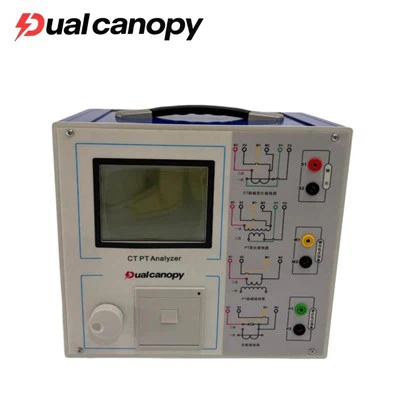
CT PT Excitation Characteristic Analyzer
Products Description The transformer comprehensive measuring instrument is an electronic device used for on-site