As a supplier of fully sealed oil-immersed transformers, detecting partial discharge is of utmost importance. Partial discharge in a fully sealed oil-immersed transformer can lead to insulation degradation, which may ultimately result in transformer failure. In this blog, I will share some effective methods and considerations for detecting partial discharge in these transformers.
Understanding Partial Discharge in Fully Sealed Oil - Immersed Transformers
Before delving into the detection methods, it is essential to understand what partial discharge is. Partial discharge occurs when the electrical stress within the insulation of a transformer exceeds the dielectric strength of a small portion of the insulation material. This causes a localized electrical discharge that does not bridge the entire insulation between conductors. In a fully sealed oil-immersed transformer, the insulation consists of oil and solid insulation materials such as paper and pressboard.
There are several factors that can contribute to partial discharge in these transformers. These include manufacturing defects, such as voids or impurities in the insulation, mechanical stress during installation or operation, and aging of the insulation materials over time.
Detection Methods
Electrical Methods
Pulse Current Method
The pulse current method is one of the most commonly used techniques for detecting partial discharge. It measures the transient current pulses generated by partial discharges. In this method, a coupling capacitor is connected in parallel with the transformer winding. When a partial discharge occurs, a current pulse is induced in the coupling capacitor, which can be detected and measured by a partial discharge detector.


The advantage of the pulse current method is its high sensitivity. It can detect very small partial discharges. However, it is also sensitive to external electromagnetic interference. To minimize the interference, the measurement should be carried out in a shielded environment or by using appropriate filtering techniques.
Radio Frequency Method
The radio frequency (RF) method detects the electromagnetic waves generated by partial discharges in the radio frequency range. RF sensors are installed around the transformer to pick up these electromagnetic signals. This method has the advantage of being able to detect partial discharges without direct electrical connection to the transformer winding. It can also provide information about the location of the partial discharge source to some extent.
However, the RF method is also affected by external RF interference, such as radio broadcasts and electrical equipment in the vicinity. Special filtering and signal processing techniques are required to distinguish the partial discharge signals from the background noise.
Chemical Methods
Dissolved Gas Analysis (DGA)
Dissolved gas analysis is a powerful tool for detecting partial discharge in oil-immersed transformers. When partial discharges occur in the oil, they cause the decomposition of the oil molecules, resulting in the formation of various gases such as hydrogen (H₂), methane (CH₄), ethane (C₂H₆), ethylene (C₂H₄), and acetylene (C₂H₂). By analyzing the concentration and ratio of these gases in the oil, we can determine whether partial discharge is occurring and estimate its severity.
For example, an increase in the concentration of hydrogen and methane is often an indication of partial discharge. The ratio of different gases can also provide information about the type of fault. DGA is a non - invasive method and can detect incipient faults before they cause significant damage to the transformer.
However, DGA has some limitations. It can only detect the cumulative effect of partial discharges over time and may not be able to detect sudden or intermittent partial discharges. Also, the interpretation of DGA results requires expertise and experience.
Ultrasonic Methods
The ultrasonic method detects the acoustic waves generated by partial discharges. When a partial discharge occurs, it produces a mechanical shock wave in the surrounding medium, which propagates as an ultrasonic wave. Ultrasonic sensors are installed on the surface of the transformer tank to detect these ultrasonic signals.
The advantage of the ultrasonic method is its ability to locate the partial discharge source accurately. By using multiple sensors and triangulation techniques, the position of the partial discharge within the transformer can be determined. However, the ultrasonic signals can be attenuated by the oil and solid insulation materials, and they are also affected by background noise from the transformer operation, such as cooling fans and pumps.
Considerations during Detection
Environmental Conditions
The environmental conditions can have a significant impact on the accuracy of partial discharge detection. High humidity, temperature variations, and electromagnetic interference can all affect the measurement results. For example, high humidity can increase the conductivity of the insulation surface, leading to false partial discharge signals. Therefore, it is important to control the environmental conditions during the detection process as much as possible.
Calibration of Detection Equipment
Regular calibration of the partial discharge detection equipment is essential to ensure accurate measurement results. The calibration should be carried out according to the relevant standards and procedures. This helps to maintain the reliability and consistency of the detection system.
Frequency of Detection
The frequency of partial discharge detection depends on the age, operating conditions, and criticality of the transformer. For new transformers, initial partial discharge tests should be carried out during the manufacturing process and before installation. After installation, regular monitoring should be carried out at appropriate intervals. For transformers in critical applications or those with a history of insulation problems, more frequent detection may be required.
Importance of Using Advanced Testing Equipment
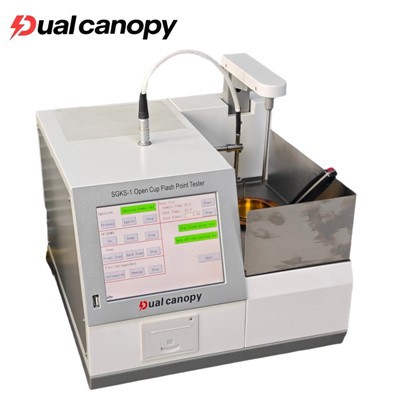
To ensure accurate and reliable partial discharge detection, it is crucial to use advanced testing equipment. For example, the Automatic Loop Resistance Tester can be used to measure the loop resistance of the transformer windings, which can provide valuable information about the integrity of the electrical connections. The Ultra-low Frequency Withstand Voltage Tester can be used to test the insulation strength of the transformer under a controlled voltage, which can help to detect potential insulation weaknesses. The Open Flash Point Tester can be used to measure the flash point of the transformer oil, which is an important parameter related to the safety and quality of the oil.
Conclusion
Detecting partial discharge in fully sealed oil-immersed transformers is a complex but crucial task. By using a combination of electrical, chemical, and ultrasonic methods, and by taking into account the environmental conditions, calibration of equipment, and frequency of detection, we can effectively detect partial discharges and prevent transformer failures.
As a supplier of fully sealed oil-immersed transformers, we are committed to providing high - quality products and reliable partial discharge detection solutions. If you are interested in our products or need more information about partial discharge detection, please feel free to contact us for procurement and further discussions.
References
- IEEE Standard C57.106 - Guide for Acceptance and Maintenance of Insulating Oil in Equipment
- IEC 60270 - High - voltage test techniques - Partial discharge measurements
- ASTM D3612 - Standard Test Methods for Analysis of Gases Dissolved in Electrical Insulating Oil by Gas Chromatography