

Why is SF6 quantitative leak detection conducted?
Safety first: When exposed to an electric arc, SF6 gas will decompose and produce toxic substances. Leakage can cause a decrease in the internal pressure of the equipment, reduce insulation performance, and potentially lead to serious malfunctions.
Economic benefits: SF6 gas is extremely expensive. Even a minor leak can result in a significant economic loss over time. Quantitative leak detection can help calculate the return on investment and determine whether immediate repair is necessary.
Environmental Protection: SF6 is a clearly potent greenhouse gas, with its global warming potential being 23,900 times that of CO₂. Strict leak control is a necessary measure for enterprises to fulfill their environmental protection responsibilities and meet regulatory requirements.
Equipment condition assessment: Through regular and quantitative leak detection, a leakage record for the equipment can be established, and the aging condition of the seals can be evaluated, providing a scientific basis for condition-based maintenance.
SF6 Gas Quantitative Leak Detector
Application scenarios of SF6 gas quantitative leak detector
Power system: GIS (Gas Insulated Switchgear), high-voltage circuit breakers, current/voltage transformers, bushings, gas-filled cabinets, etc.
Manufacturing industry: Factory quality inspection for SF6 gas production plants and power equipment manufacturing plants.
Research institute: Development and experimentation of related electrical equipment.
Third-party testing institution: Provides professional equipment condition assessment services for customers.
Precautions for Using SF6 Gas Quantitative Leak Detector
Calibration: Regularly calibrate the instrument using standard concentrations of SF6 gas to ensure measurement accuracy.
Environmental background value: Before conducting the test, measure the background concentration of SF6 in the environment first, and then reset the instrument to zero.
Scanning method: The probe should move slowly and steadily (generally recommended to be less than 5 centimeters per second), and the distance from the measured surface should be approximately 3-5 millimeters.
Windproofing: When using outdoors, try to do it under calm or gentle wind conditions, or use a windscreen to prevent leaked gas from being blown away.
Safety precautions: In areas where SF₆ decomposition products may exist (such as near faulty equipment), it is necessary to wear a gas mask.
Application And Usage Precautions Of SF6 Gas Quantitative Leak Detector
Popular Products

Open Flash Point Tester
Product Introduction Features: Fully automatic flash point tester, with touch screen instead of keyboard operation.

Capacitance Test
Products Description This 50kVA single phase pole mounted transformer is exported to Canada inJuly,2024.The rated

TTR Transformer Turns Ratio Tester
Products Description The ZS6810A / ZS6810E transformer ratio tester is mainly used for measuring the turns ratio or

Single-phase relay protection tester
The single-phase relay protection tester is a new type of intelligent test instrument, primarily used to calibrate

Sweep Frequency Response Analysers
Products Description Overview The Transformer winding deformation tester transformer winding deformation tester is used
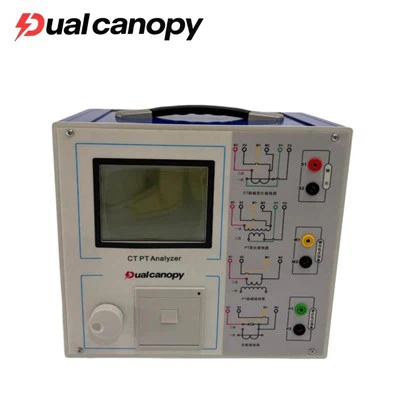
CT PT Excitation Characteristic Analyzer
Products Description The transformer comprehensive measuring instrument is an electronic device used for on-site