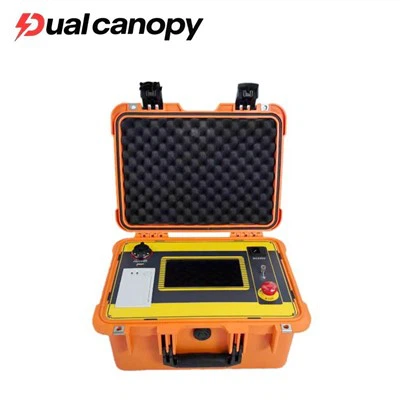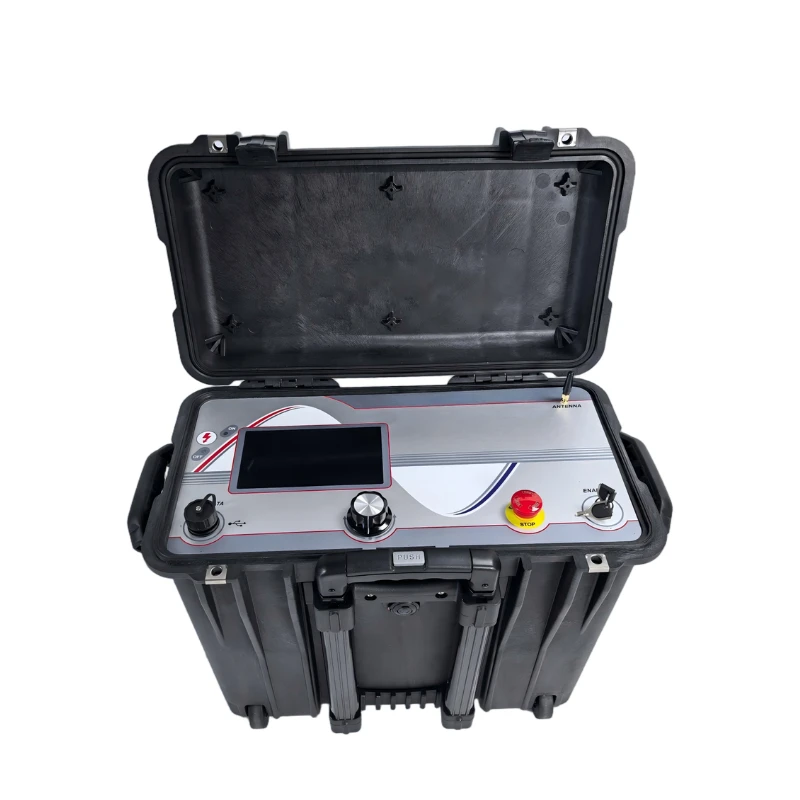
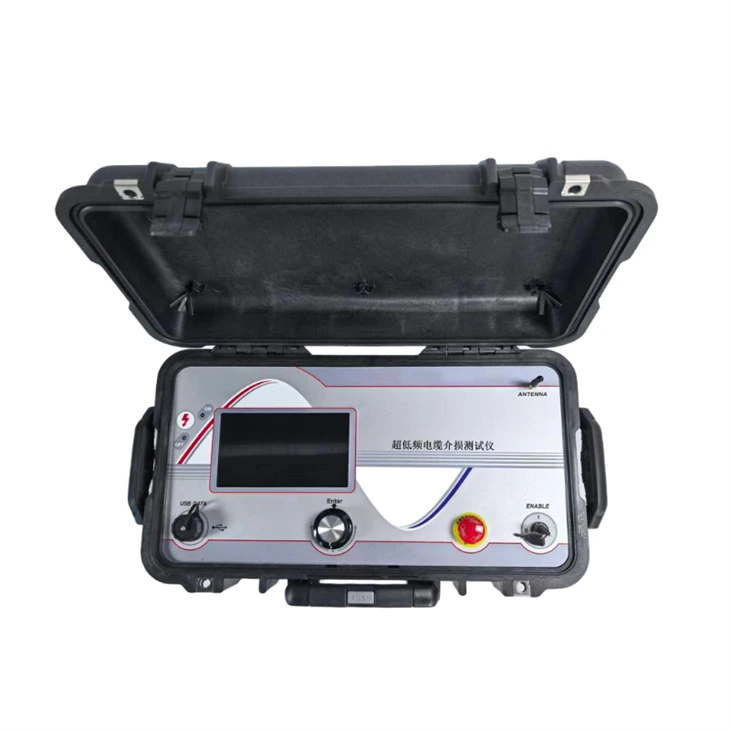
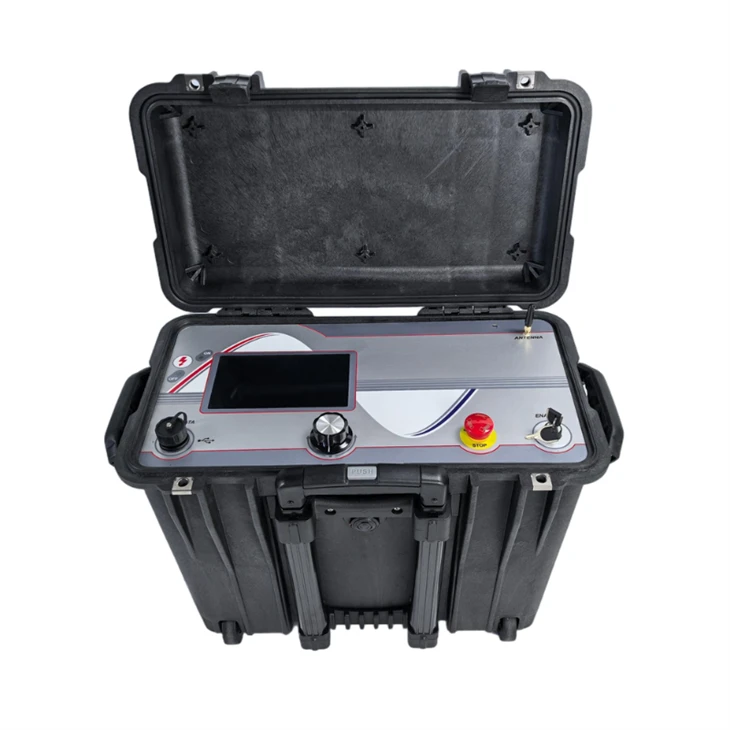
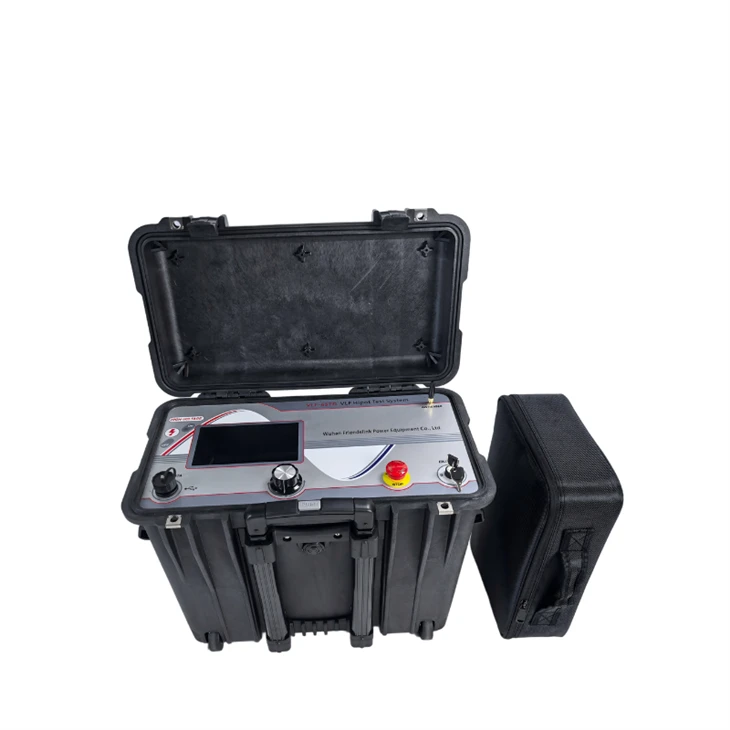
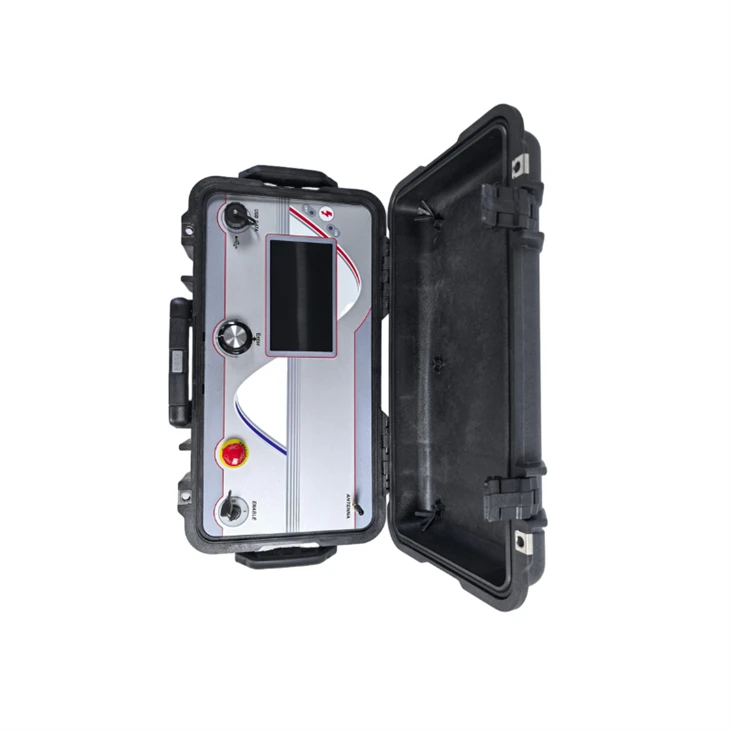
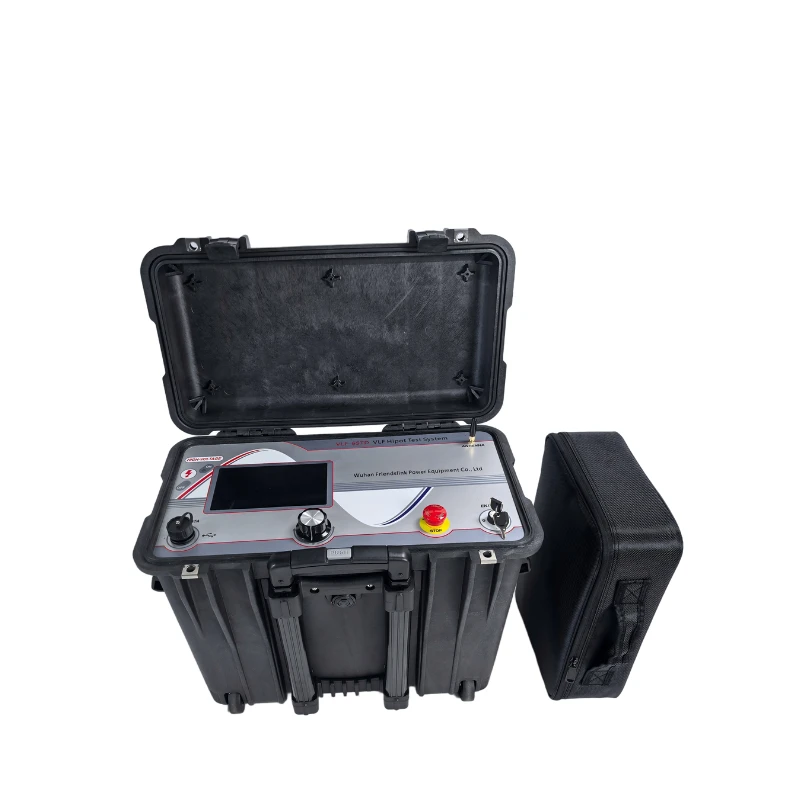
Dual Canopy Mechanic Electrical Engineering Co., Ltd. is one of the leading manufacturers and suppliers of 0.1Hz AC Vlf Hipot Tester in China. Please feel free to wholesale discount products for sale here and get quotation from our factory. Customized orders are welcome.
What is 0.1Hz AC VLF Hipot Tester?
The 0.1Hz AC VLF Hipot Tester (Ultra Low Frequency High Voltage Generator) is a specialized high-voltage test set designed for withstand testing (Hipot testing) of high-capacitance electrical equipment, primarily medium and high-voltage power cables (XLPE, EPR, etc.), as well as large generators, motors, and transformers.
Unlike traditional power frequency (50/60Hz) test sets which are bulky and require massive power sources for long cables, the VLF tester operates at a very low frequency (typically 0.1Hz or lower, e.g., 0.05Hz, 0.02Hz). According to the principle
Xc=1/2πfC,lowering the frequency significantly increases the capacitive reactance of the test object, thereby drastically reducing the required current and power. This allows for a compact, lightweight, and portable design that can be easily transported to field sites.
This tester produces a sinusoidal or cosine-rectangular waveform that simulates the aging and stress conditions of power frequency voltage on insulation, making it an accepted standard (per IEEE 400.2 and IEC 60502) for the acceptance and maintenance testing of solid dielectric cables. It effectively detects defects such as voids, water trees, and poor workmanship without causing harmful discharge that might occur with DC testing.
| Output frequency | 0.1Hz, 0.05Hz, 0.02Hz |
| Maximum Capacitance Load | 0.1Hz@0.5µF/24kVrms/34kVpeak , 0.05Hz@1.0µF/24kVrms/34kVpeak , 0.01Hz@8.0µF/18kVrms/25kVpeak |
| Output Voltage | |
| DC Voltage | ±1–34kV |
| Resolution | 0.001kV |
Where can this equipment be used?
•Power cables: XLPE/EPR insulated power cables (6kV ~ 500kV) - Acceptance testing, withstand voltage testing, preventative testing, and post-fault repair verification.
•Power plants: Generator stator windings, large motors - Insulation withstand voltage testing, aging assessment.
•Substations: Power transformers, GIS (with step-up devices) - Insulation strength verification.
•New energy: Wind power/photovoltaic power plant collector lines - Pre-commissioning withstand voltage testing.
•Railway transportation: Metro/high-speed rail feeder cables - Operation and maintenance testing.
How to use it safely?
High Voltage Danger Warning: This equipment outputs high voltage up to tens of kilovolts, posing a fatal risk of electric shock. Operators must hold a high voltage testing qualification certificate and strictly adhere to the "Electrical Safety Work Regulations" (DL 408).
Safety Zone Setup: The test site must be clearly fenced off and marked with "High Voltage Danger" warning signs. Unauthorized personnel are strictly prohibited from entering the safety zone. The test area should be monitored by designated personnel.
Reliable Grounding: Before testing, ensure that the test sample, testing equipment, and control box are reliably grounded (grounding resistance < 0.5Ω). The grounding wire should be as short and thick as possible.
Test Sample Preparation:
The cable under test must be completely disconnected from the system, and both ends must be properly sealed against moisture.
Both ends of the cable must be reliably grounded to eliminate residual charge.
Confirm that the insulation between the cable core and sheath is good (this can be measured with a megohmmeter first).
Connecting Cables: Use qualified high voltage test cables to connect the test sample. Avoid excessively long high voltage lines dangling or bringing them close together to prevent air discharge. Anti-corona devices should be installed at the high voltage end. Discharge Procedure: After the test, do not touch the test specimen immediately. The power supply must be disconnected first. Use a discharge rod to thoroughly discharge the specimen multiple times until no sparks or discharge sounds are heard. After the VLF test, the cable retains a significant charge; therefore, the discharge time should be longer than that of the power frequency test.

Dual Canopy Mechanical Electrical Engineering Co., Ltd. stands as a preeminent high-tech enterprise at the forefront of electrical system automation and precision testing.
Pre-sales Service
Selection Calculation: Customers need to provide the cable model, length, voltage rating, and capacitance. Our engineers will assist in calculating the required VLF tester power and voltage rating free of charge to ensure accurate selection.
Technical Consultation: Answering technical questions regarding the IEEE 400.2 standard, VLF testing principles, waveform differences, etc.
Customized Solutions: Providing customized protection levels (e.g., rainproof, shockproof) for special sites (such as offshore wind power, tunnel construction).


After-sales Service
Warranty Policy: 24-month warranty on the entire machine (excluding damage caused by human error and consumables).
Lifetime Maintenance: Lifetime paid repair service provided after the warranty period, charging only the cost of materials.
Rapid Response: 24/7 technical support hotline, fault response time < 2 hours.
📞 Pre-sales Hotline: [+8613603329412]
📧 Email: [dylan@dualcanopy.com]
💬 24-Hour Online Response

FAQ
Q: Why is 0.1Hz frequency chosen for VLF testing?
A: The 0.1Hz frequency is the industry standard for VLF testing because it offers the best balance between equipment size and test effectiveness. At 0.1Hz, the capacitive reactance of the cable is high enough to significantly reduce the required charging current (making the equipment portable), yet low enough to effectively stress the insulation and detect defects like water trees. Lower frequencies (e.g., 0.01Hz) require even less current but may be less effective at detecting certain defects and take longer to test. Standards like IEEE 400.2 specifically recommend 0.1Hz.
Q: What is the difference between VLF testing and DC Hipot testing?
A: DC Hipot testing applies a direct current voltage. While it is simple and lightweight, it can cause "space charge" accumulation in modern XLPE/EPR cables, potentially damaging good insulation and failing to detect certain defects effectively. VLF (0.1Hz) testing applies an alternating current voltage at very low frequency. It simulates the AC stress the cable experiences in service, does not cause harmful space charge buildup, and is much more effective at detecting defects like water trees and poor splices. VLF is now the preferred method for field testing of solid dielectric cables.
Q: Can this tester be used for Tan Delta (Dissipation Factor) testing?
A: Many of our VLF Hipot Testers are designed with the capability to perform Tan Delta (Tan δ) testing when equipped with an optional Tan Delta measurement module. Tan Delta testing is a diagnostic technique used to assess the overall condition of the cable insulation (aging, moisture, contamination) rather than just a pass/fail withstand test. Please specify if you require this diagnostic capability when inquiring.
Hot Tags: 0.1Hz AC Vlf Hipot Tester, China 0.1Hz AC Vlf Hipot Tester manufacturers, suppliers, factory, VLF Cable Testing equipment, VLF AC Test Set, vlf 0 1hz ac hi pot tester, VLF 50kV hi pot test, VLF TESTing KIT, ac dc high voltage divider